
The ISOLDE Improvement Programme

The ISOLDE Improvement Programme (IIP) brings together a series of upgrades and consolidation activities to maintain and further develop the ISOLDE facility. The programme includes projects addressing the accelerator infrastructure, beam production, and delivery systems, and experimental facilities, with the objective of improving operational flexibility, reliability, and long-term sustainability. Among the activities included in the programme are the ISOLDE primary areas, the ventilation upgrade, the RILIS laboratory consolidation, and the ISOLDE Beam Dumps Replacement and Sustainability (IBDRS) project.
The third Long Shutdown (LS3) of CERN’s accelerator complex provides a unique opportunity to consolidate and further develop the ISOLDE facility. The full scope of the programme was approved during the CERN Mid-Term Planning 2025 (MTP 2025) exercise, enabling the integration of the various projects into the LS3 programme and complementing activities already approved in previous years. During LS3, several systems across the complete radioactive ion beam production, delivery and post-acceleration chain will undergo consolidation and upgrades. These activities will address ageing infrastructure, improve operational flexibility and reliability, and prepare ISOLDE for future physics campaigns while ensuring the continued operation of the facility.
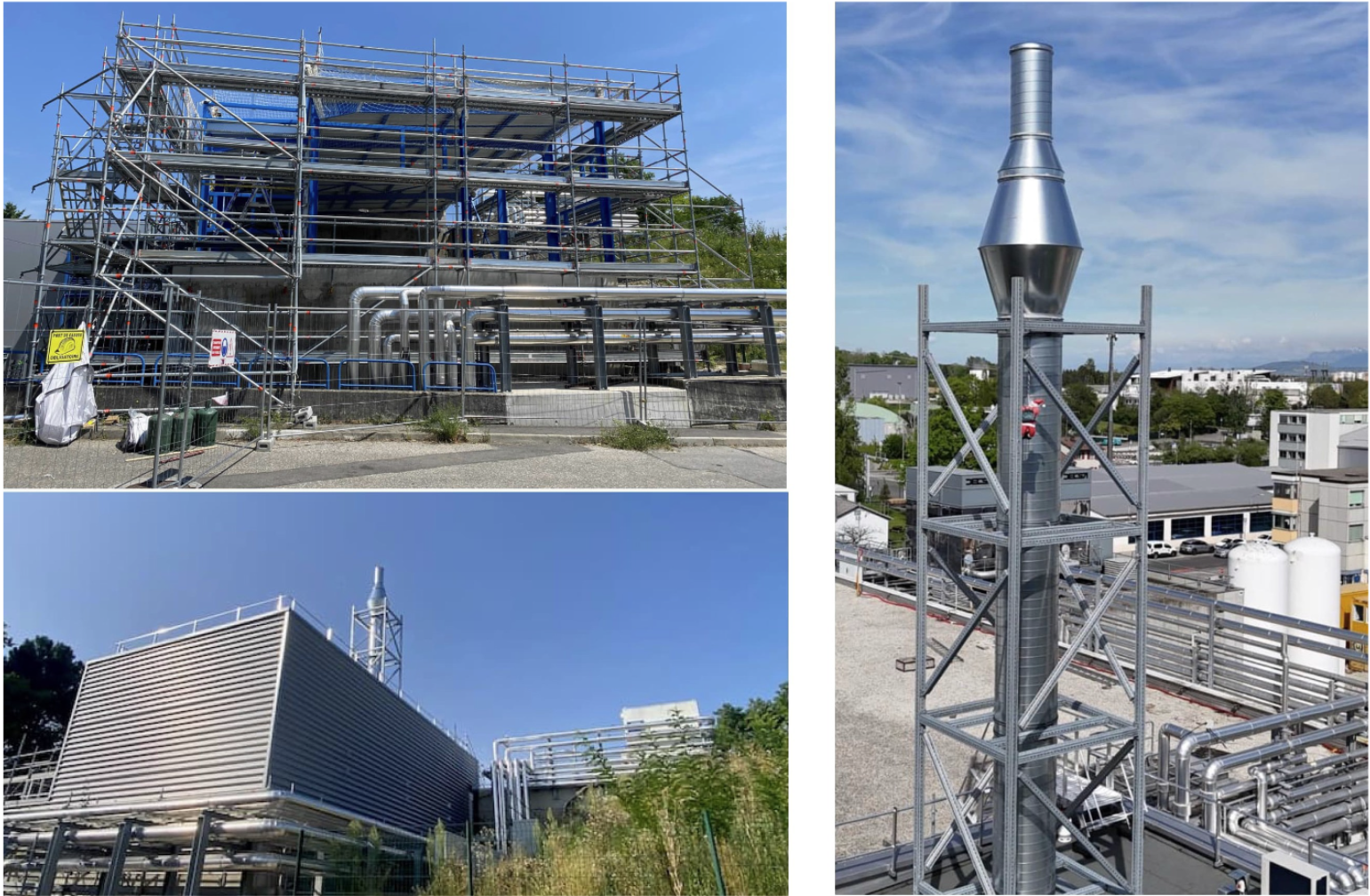
Figure 1: Left: Different phases of the construction of the Building 197 extension, with the top picture showing the internal metallic structure during assembly and the bottom picture showing the completed building. Right: The 10~m-high ventilation stack installed on top of the new building.
The start of LS3 for ISOLDE
The year 2025 was particularly demanding, as the technical teams had to simultaneously support physics operation, prepare the LS3 activities, and address several technical issues inherent to the end of a running period. Despite these challenges, significant effort was invested in preparing the shutdown activities and ensuring that major projects could start as soon as beam operation ended. The LS3 shutdown at ISOLDE began in December 2025, well ahead of the shutdown of the rest of the CERN accelerator complex. This anticipation proved extremely beneficial as activities started at a very fast pace, capitalising on the availability of technical support teams while facilities operation was still ongoing elsewhere at CERN. By preparing several activities in advance and rapidly transitioning into execution mode, the impact of LS3 is already clearly visible across the facility, with major interventions now ongoing in parallel in many areas.
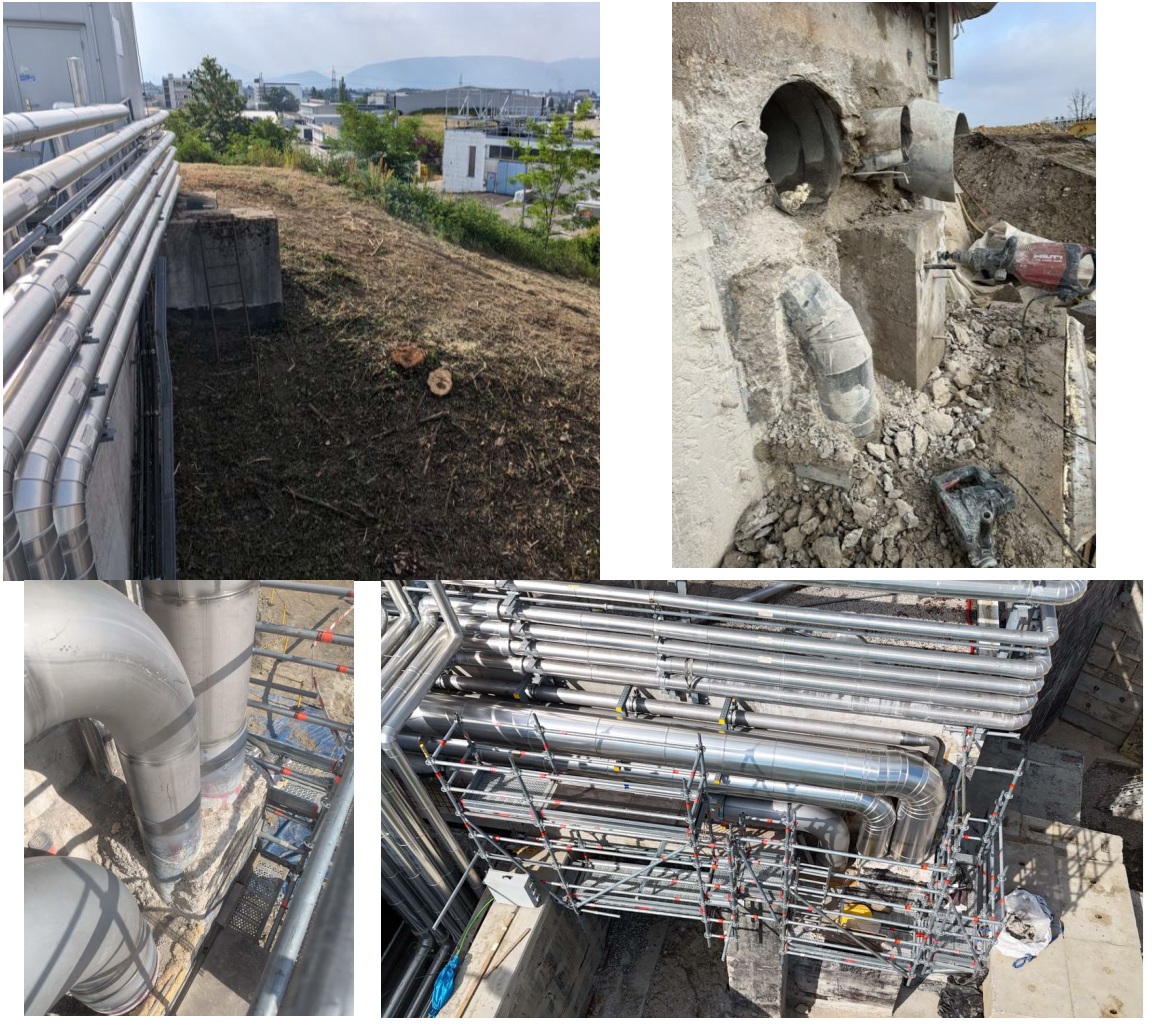
Figure 2: Top left: Concrete shielding structure enclosing the original ventilation ductwork. Top right and bottom left: Demolition of the shielding structure to expose the embedded ducts and pipes. Bottom right: Final configuration after installation and connection of the new steel ducting to the existing infrastructure.
One of the first major LS3 activities already completed is the ISOLDE Primary Areas Ventilation and Fire Safety upgrade project, which had significantly progressed during the 2025 physics campaign to minimise overlap with the IBDRS project during LS3 (see Fig. 1). The project was initiated following a fire safety review assessing the potential radiological impact of a fire in the ISOLDE target area. The upgrade included extending Building 197 to accommodate new HVAC equipment serving the primary areas, along with charcoal filtration for radioactive volatile species, fire dampers, and the physical separation of the ventilation infrastructure from the experimental hall.
The project required substantial coordination, as much of the civil engineering, installation, and integration work had to be carried out in parallel with the 2025 physics campaign. As shown in Fig. 1, the building and its 10 m-high ventilation stack were completed before the end of the run. A closer look at the picture on the right reveals that a special guest visited ISOLDE just in time for the end-of-year winter party.
Following the proton stop, the final phase focused on connecting the new ventilation infrastructure to the existing ductwork embedded within a concrete shielding structure designed to reduce stray radiation levels caused by back-scattered particles from the GPS target station (see Fig. 2). The structure was carefully demolished to expose the ducts without damage or obstruction. CERN’s EN-MME group then welded transition pieces onto the existing ductwork, allowing EN-CV to connect the old and new ventilation systems. These activities were completed during the first months of LS3, enabling commissioning of the new installation and concluding a major safety upgrade for the ISOLDE facility. The new infrastructure ensures compliance with modern radiation safety and confinement standards for decades to come.
The BTY line
The ISOLDE facility relies on high-energy proton beams delivered from the Proton Synchrotron Booster (PSB) to dedicated production targets, where a wide range of radioactive isotopes are generated through spallation, fragmentation, and fission reactions. The availability of GeV proton beams at CERN enables the production of one of the broadest ranges of radioactive ion beams available at any RIB facility.
The BTY line transfers proton beams from the Proton Synchrotron Booster (PSB) to the ISOLDE facility, providing the beam delivery required for isotope production experiments. As the BTY line was not upgraded during LS2 as part of the LIU (LHC Injectors Upgrade) project, ISOLDE currently does not benefit from the 2.0 GeV beam energy that the PS Booster can now deliver, with operation remaining limited to 1.7 GeV for GPS and 1.4 GeV for HRS. The LS3 upgrade includes the reconfiguration of the vertical dogleg on the PS Booster side of the beamline, the consolidation or replacement of several magnets, including the end-line focusing quadrupoles that exhibited significant signs of corrosion, as well as the installation of new steering magnets capable of directing the beam onto the targets at higher energy, together with the replacement of all power converters.
Increasing the proton beam energy from 1.4 to 2.0 GeV will enhance isotope production in selected regions of the nuclear chart, particularly for isotopes produced via high-energy spallation and fragmentation reactions. The gain is isotope- and target-dependent, with significant improvements expected for several neutron-deficient isotopes, while lower-energy operation remains available when the production cross-section is higher at 1.4 GeV. In addition, the operational flexibility of the facility will be greatly enhanced through pulse-to-pulse modulation and the possibility to alternatively deliver proton pulses to GPS, HRS, or the target at MEDICIS. Finally, replacing the existing solid steel yoke magnets with laminated designs for the final focusing quadrupoles will also help optimise energy consumption.
Inside the machine, several preparatory activities have already taken place for the BTY line upgrade. On the PS Booster side, the BTY magnets were removed during the injectors' technical stop in January to allow the TE-MSC teams to refurbish them ahead of the peak LS3 workload. On the ISOLDE side, progress remained more limited during the first months of LS3 due to access restrictions linked to the ventilation upgrade project and shielding block handling activities associated with the IBDRS project above the target area. Nevertheless, several enabling works were successfully completed. For example, the trenches formerly used by the ISOLDE robots were filled with concrete to support the weight of the BTY dipole magnets during handling for the beamline upgrade (see Fig. 3).
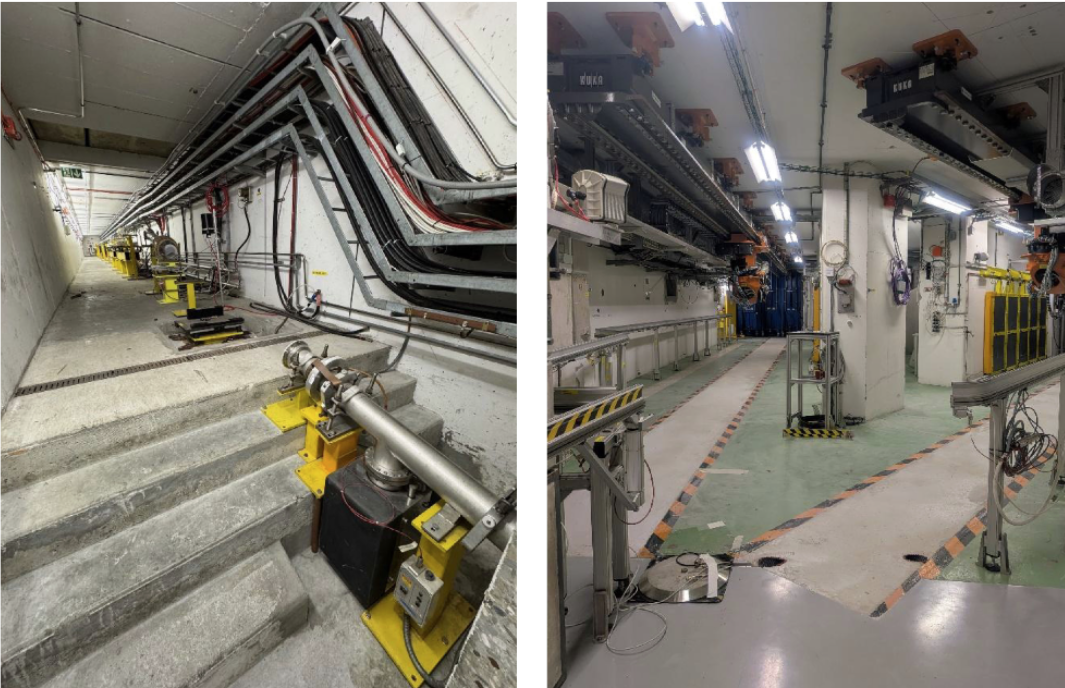
Figure 3: Preparatory activities for the BTY line upgrade during LS3. Left: BTY transfer line on the PS Booster side after the removal of the magnets for refurbishment and consolidation activities. Right: Former ISOLDE robot trenches filled with concrete in preparation for the future installation and handling of the upgraded BTY beamline magnets.
The ISOLDE beam dumps
A major component of the IIP is the ISOLDE Beam Dumps Replacement and Sustainability (IBDRS) project, which aims to replace the two beam dumps located downstream of the GPS and HRS target stations. ISOLDE was originally located at the CERN Synchro-Cyclotron (SC) before being relocated to its present location near the Proton Synchrotron Booster (PSB) in 1992, when the current dumps were installed. After more than 30 years of operation, they are approaching their mechanical and thermal design limits, and their replacement is required to support the facility's long-term operation and future increases in beam energy and intensity.
The existing dumps consist of iron blocks embedded in concrete shielding structures and covered by soil. This configuration limits access to surrounding equipment for maintenance and upgrades and complicates interventions due to the required radiation protection measures. The IBDRS project, therefore, includes the installation of new beam dumps together with a dedicated underground technical building housing the associated shielding infrastructure.
One of the most visible signs of the start of LS3 at ISOLDE is the IBDRS worksite, which has significantly transformed the area around the facility. The project entered its execution phase immediately after the proton stop. The initial activities focused on core-sampling campaigns to validate the FLUKA calculations used to estimate the soil activation profile and to determine the volume of radioactive material that requires separate handling from conventional excavation material.
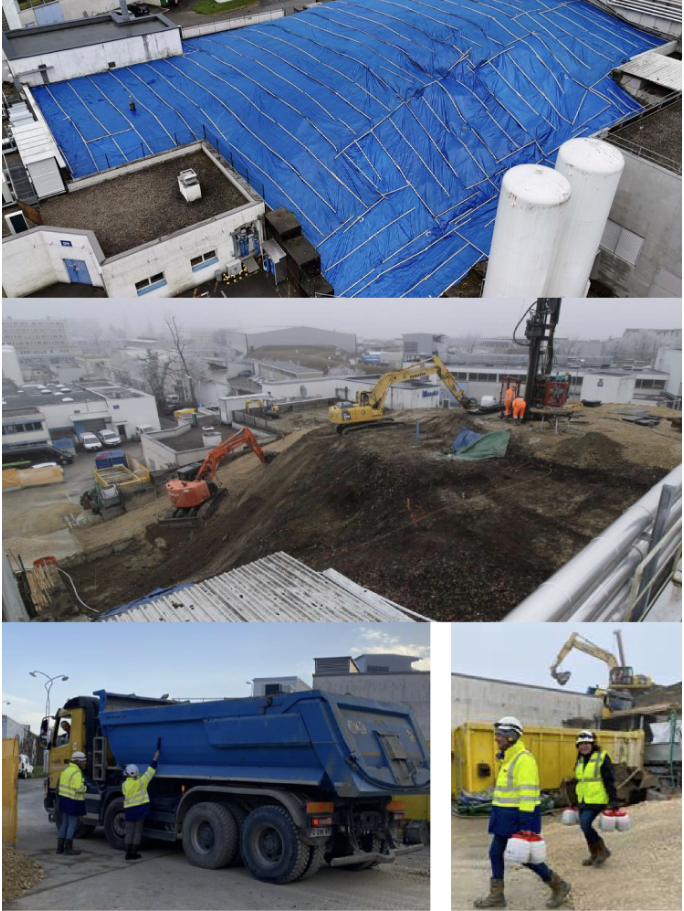
Figure 4: Different phases of the soil removal activities for the IBDRS project. Top: Protective tarpaulin installed over the target area during the final winter months, ahead of excavation work. Middle: IBDRS worksite during the excavation and core-sampling campaign. Bottom left: RP team performing radiological checks on a truck leaving the site. Bottom right: Soil sampling activities for gamma-spectrometry analysis.
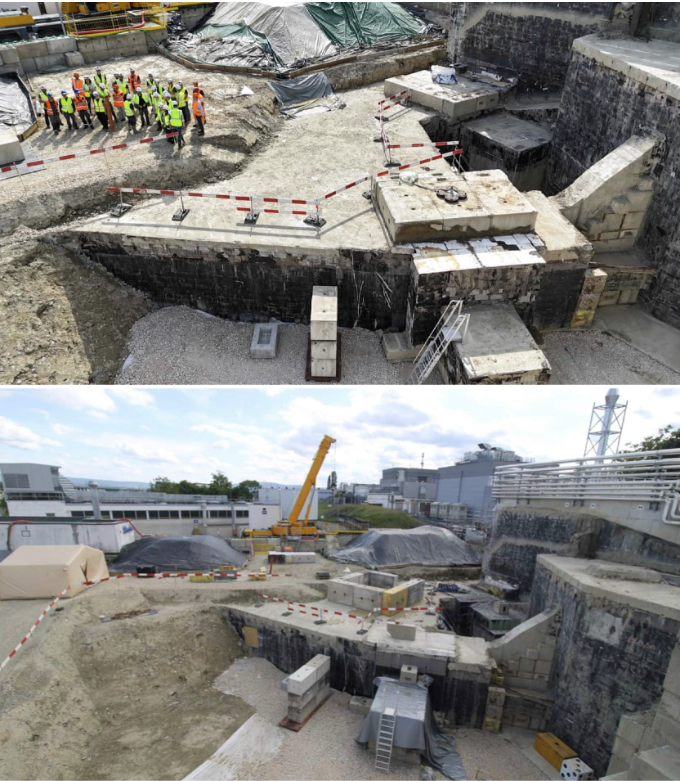
Figure 5: Progress of the IBDRS excavation and dismantling activities. Top: Target area after completion of the soil removal campaign, exposing the civil-engineering infrastructure and surrounding buildings. Bottom: Ongoing dismantling of the beam-dump shielding, showing the infrastructure used for cleaning and handling shielding blocks, together with the crane installed for removal operations
Following these characterisation activities, the removal of the non-radioactive soil covering the target area was carried out over several weeks. At the peak of the operation, up to 30 trucks per day left the ISOLDE site after radiological checks performed by the RP teams, with the material transported to a temporary storage area in the SPS zone. The work then moved to the handling of activated soil, which is currently stored in dedicated areas on the worksite and will later be reused to fill the excavation above the future underground technical building (see Fig. 4). The project has now entered the phase of dismantling the shielding blocks surrounding the beam dumps and removing the dumps themselves. The operations started with the GPS beam dump and its associated shielding, followed by the HRS beam dump. Once the existing dumps have been removed, construction of the new underground technical building and installation of the replacement beam dumps will begin.
Activities in the Experimental Hall
Walking through the ISOLDE experimental hall today, the extent of the transformation since the end of 2025 is immediately visible. The RILIS laboratory and the ISCOOL high-voltage cage have been fully dismantled to make room for the future RILIS installation, which will provide more floor space and improved safety and operational conditions. As part of the reconfiguration, the ISCOOL high-voltage cage will be relocated above the new laboratory structure (see Figs. 6 and 7).
The Resonance Ionisation Laser Ion Source (RILIS) is a key component of the ISOLDE physics programme and provides radioactive ion beams for more than 50% of the experiments carried out at the facility. The current installation no longer fully satisfies the growing operational demands. The upgrade therefore includes an enlarged laser laboratory, improved safety infrastructure, and greater operational flexibility. A particularly important development is the separation of the laser launch areas for the GPS and HRS separators, which allows their simultaneous operation and improves overall beam delivery efficiency.
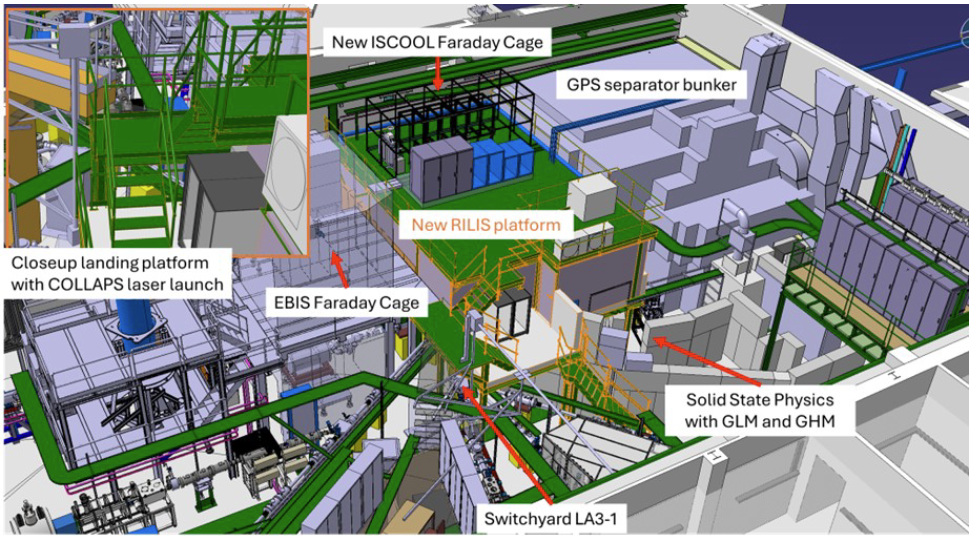
Figure 6: 3D CAD rendering of the future RILIS laboratory layout after LS3, showing the new configuration with increased floor space and the relocated high-voltage platform installed above the infrastructure.
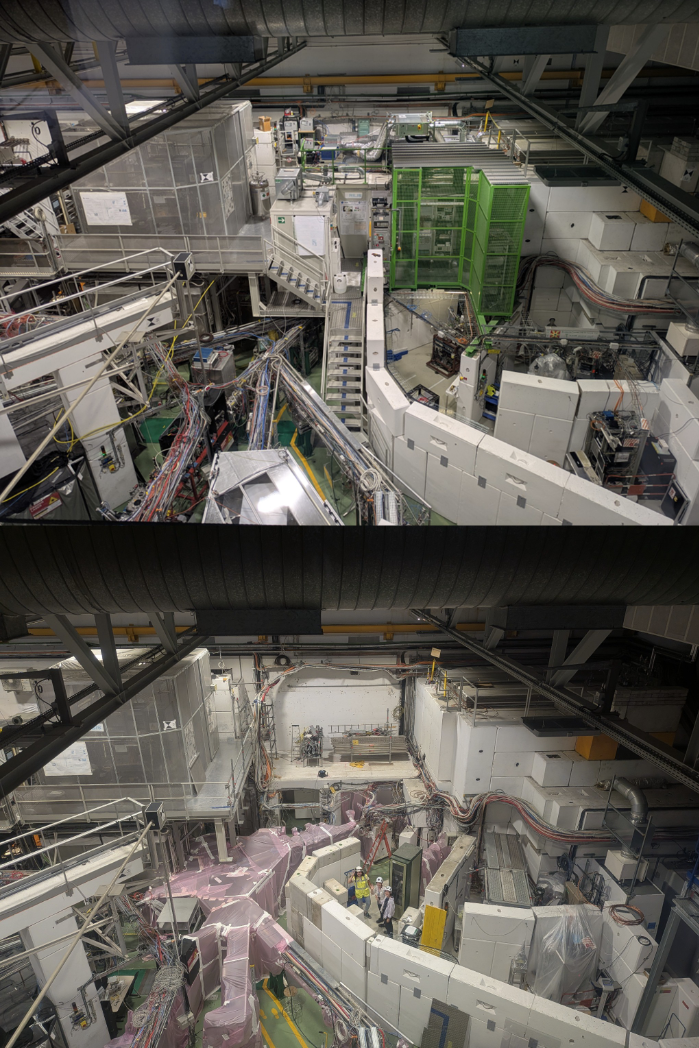
Figure 7: Dismantling activities for the RILIS laboratory consolidation project. Top: RILIS laboratory area before the start of LS3 works. Bottom: The same area after dismantling of the RILIS laboratory and the ISCOOL high-voltage cage, now cleared for the installation of the new infrastructure.
At the entrance to the hall from Building 508, a new metallic platform has also been installed to host the power converters for the electrostatic elements of the low-energy beamlines, marking another visible step in the ongoing modernisation of ISOLDE. In parallel, the ISOLTRAP wooden platform has been fully removed, leaving the trap region exposed in preparation for a new metallic support structure that will further improve safety and accessibility.
Several other activities are progressing in parallel across the facility. These include upgrades to the NMR probes used for HRS magnetic-field regulation, improvements to the ISCOOL cooler/buncher hardware and diagnostics, modifications enabling pulsing of the central beamline (CA0), and a general consolidation of beam instrumentation. At the same time, a number of offline experiments continue to run, ensuring that physics output is maintained throughout the upgrade period.
Preparing REX/HIE-ISOLDE for Run 4
For the REX/HIE-ISOLDE post-accelerator, several consolidation and upgrade activities aimed at reducing commissioning time, maximising the time available for physics, and recovering the maximum beam energy will be implemented. These include studies to identify and mitigate discharge sources in REXTRAP, the installation of a new electron collector for REXEBIS, and the deployment of new 101 MHz RF amplifiers and low-level RF (LLRF) systems for the normal-conducting cavities.
For the superconducting HIE-ISOLDE linac, a gradual performance degradation has significantly affected the high-energy physics programme in recent years. One of the key LS3 activities is the refurbishment of Cryomodule 1 (CM1). To this end, the cryomodule was removed from the HIE-ISOLDE linac bunker and transferred to the SM18 facility. The operation required extensive preparation and coordination across several CERN groups for handling, radiological checks, transport, and logistics. Given the unique nature of the superconducting cryomodule, the transfer involved temporary road closures around ISOLDE and coordination with the host-state authorities for the border crossing.
Additional measures include the installation of NEG pumping upstream of the first cryomodule, the integration and commissioning of a new 2 kL liquid-helium dewar in the cryoplant, and studies of an LN2/GHe heat-exchanger cooling system for the cryomodule thermal shields. Together, these activities aim to restore and sustain the performance of the full REX/HIE-ISOLDE accelerator throughout Run 4.
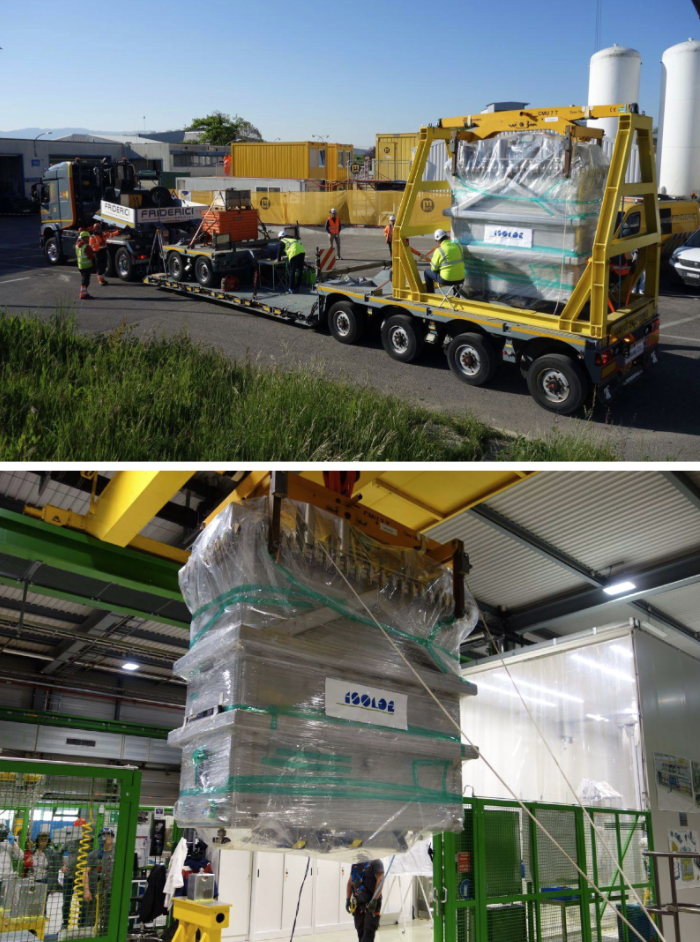
Figure 8: Top: Transport of the first HIE-ISOLDE cryomodule (CM1) from ISOLDE to the SM18 facility. Bottom: Arrival and handling of CM1 in SM18, where it will be refurbished and prepared in the clean room for future operation at ISOLDE.
In parallel, the procurement of the missing components required to assemble spare Cryomodule 5 (CM5) was also approved as part of the long-term strategy for cryomodule maintenance beyond 2030. The availability of a spare cryomodule will significantly reduce the risks associated with major failures of the superconducting linac and improve its long-term maintainability.
Outlook
Although significant progress has already been achieved in the first months of LS3, nearly two years of work remain before the planned activities are completed and the facility is recommissioned in preparation for the restart of physics in 2028. Challenges remain, including known technical constraints and the inevitable surprises that accompany a programme of this scale and complexity.
Nevertheless, the extensive preparation carried out over recent years, together with the expertise and commitment of CERN’s technical teams and the ISOLDE community, provides a strong foundation for the successful delivery of the programme. By the end of LS3, ISOLDE will benefit from major improvements across its radioactive-ion-beam production, beam delivery and post-acceleration systems, strengthening the facility’s performance and reliability for Run 4.
While the current focus is firmly on the successful execution of LS3, discussions about the facility's longer-term evolution have already begun. In the context of CERN’s emerging roadmap for non-collider physics, ISOLDE remains well positioned to contribute new ideas and future developments that build on its unique capabilities and broad scientific programme. As we approach 60 years of radioactive-ion-beam science at CERN, preparations for the next generation of upgrades are already taking shape, ensuring that ISOLDE continues to evolve and maintain its leading role in the decades to come.
Note: This article is a modified version of the original contribution by Joachim Vollaire on the ISOLDE Newsletter 2026.


